Tours for School Groups
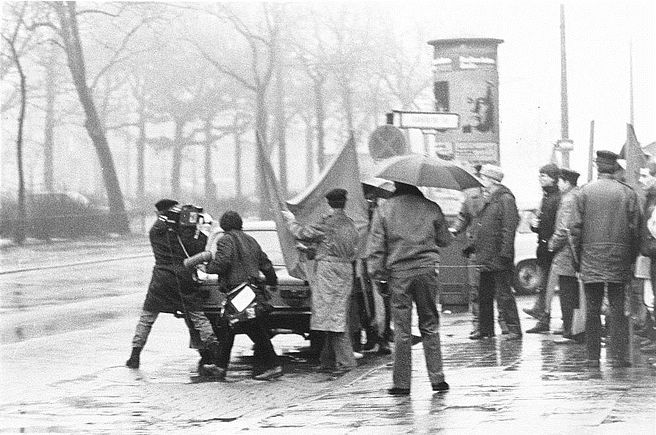
EscapePrimary school children aged from 9 to 12 learn why people in former East Germany left their home country. What were they unhappy about? What did they protest against? What were the circumstances that brought about the fall of the Wall and the reunification of Germany?
Appointments by arrangementAge group:Grades 3-6
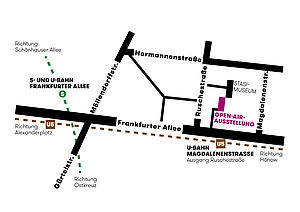
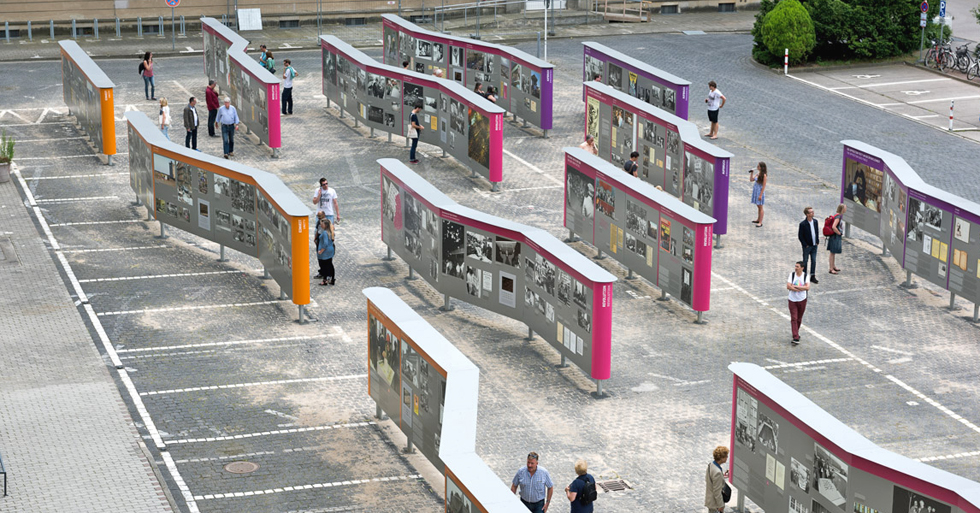
Meeting place:At the exhibition pavilion
Languages:Bosnian, Croatian, English, French, German, Italian, Montenegrin, Serbian, Turkish
Duration:60 minutes
Fee: 30
Exhibition entry free
Protest!Tour for school groups
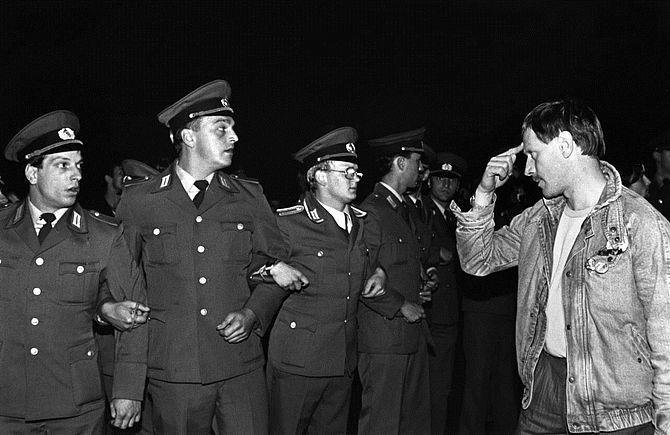
How did young people live in the GDR? In 1989 they increasingly refused to bow to the dictates of the state. Which means did they have on their hands? In this tour pupils from grades 13 to 16 deal with the youth protest movement of this time, its aims and achievements.
Appointments by arrangementAge group:Grades 6-10
Meeting place:At the exhibition pavilion
Languages:Bosnian, Croatian, English, French, German, Italian, Montenegrin, Serbian, Turkish
Duration:60 minutes
Fee: 30
Exhibition entry free
Freedom!Tour for school groups
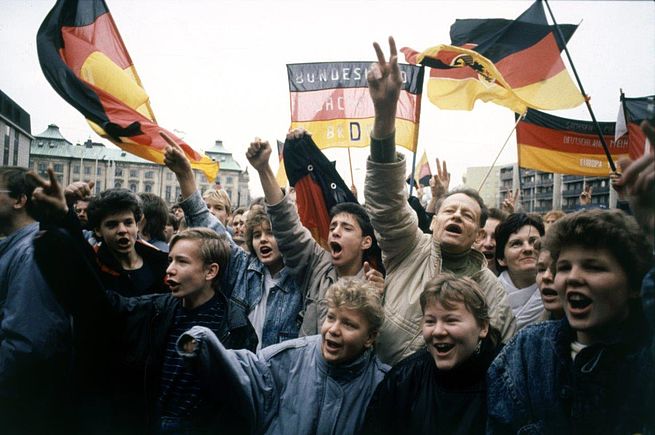
How did the governments claims relate to reality in the GDR? Why did the citizens have to disempower the Socialist Unity Party and enforce the opening of the Stasi files? And why did they choose rapid reunification? In this tour pupils aged 16 to 19 get to know the people who prepared and enforced the Peaceful Revolution as well as their causes, aims and achievements.
Appointments by arrangementAge group:Grades 10-13
Meeting place:At the exhibition pavilion
Languages:Bosnian, Croatian, English, French, German, Italian, Montenegrin, Serbian, Turkish
Duration:60 minutes
Fee: 30
Exhibition entry free
WORKSHOPS FOR SCHOOL GROUPS
Stories on EscapeIn this workshop school children of the grades 3 to 6 get to know possible motives for escape and the circumstances which have to be considered. "Imagine you had to flee. What would you take with you? What would you leave behind? How would you flee? Do you really want to take all this?" The pupils can express their ideas and experiences with the help of various techniques such as collage, drawing, printing game, or creative writing. The workshop can be booked as of the beginning of October.
Appointments by arrangementAge group:Grades 3-6
Meeting place:At the exhibition pavilion
Languages:Bosnian, Croatian, English, French, German, Italian, Montenegrin, Serbian, Turkish
Duration:120 minutes
Fee: 70
Exhibition entry free
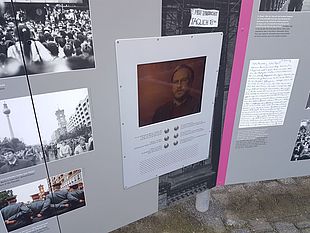
Call for ProtestMembers of the opposition wrote and copied handbills and newspapers on wax matrices. In the exhibition such an apparatus is available and after their exhibition visit pupils of the grades 7 to 13 can design their own handbills. Thus they gain insight into the complicated communication circumstances members of the opposition had to deal with in the GDR.
Appointments by arrangementAge group:Grades 7-13
Meeting place:At the exhibition pavilion
Languages:Bosnian, Croatian, English, French, German, Italian, Montenegrin, Serbian, Turkish
Duration:120 minutes
Fee: 70
Exhibition entry free
Youth in the OppositionThe workshop starts with an exhibition visit concentrating on the following aspects:
Foundation of the GDR and opposition in the 50s and 60s (17 June 1953, Prague Spring 1968)
Situation of artists and dissidents in the GDR
Situation of the youth in the GDR their possibilities of expression, development and organisation (e.g. "Umweltbibliothek", Initiative for Freedom and Civil Rights), part of the church
Departure and escape
Reaktions of the state considering the growing opposition intention and results
Afterwards the pupils divide into study groups. In short biographies four persons are introduced which engaged in the opposition movement of the GDR as young adolescents: Bettina Wegner, Till Böttcher, Uta Ihlow, Roland Jahn. Then the pupils search for answers on one of the following questions with the help of a glossary, a plan of the exhibition marking the relevant stations as well as worksheets with detailed tasks:
In which way does the opposition in the first years of the GDR differ from the opposition in the middle/end of the 80s?
Which scope for design and rooms did the youth in the GDR have?
Which role played departure and escape for the opposition in the GDR?
What was the states reaction on the opposition becoming stronger and appearing before the public?
The results of the research will be presented and discussed in the plenum of the exhibition.
CONTEMPORARY WITNESS INTERVIEV
Contemporary Witness InterviewUwe Dähn (contemporary witness and protagonist) accompanies you on your visit to the exhibition and afterwards discusses the processes that led to the Peaceful Revolution.
Uwe Dähn: born 1950; economist; 1976-1978 'Zentralinstitut für Wirtschaftswissenschaften'; illegal work in opposition circles; after dismissal boilerman, photo lab technician, photographer, dramatic adviser, stage director et al.; participation in the Pankow Peace Circle, active in New Forum from autumn 1989; 1990-1992 District Council for Culture and Education in Berlin-Mitte; 1993-1994 Alliance 90 Federal Executive; 1995-1999 Member of the Berlin City Parliament (parliamentary party Alliance 90/Green Party); 2001-2002 director of the Theaterhaus Mitte; since 2002 historical guided tours through Berlin (also by rickshaw); at the moment working in a project of cultural youth education (theatre with schools).
Appointments by arrangementAge group:Grades 10-13
Languages:Discussions with contemporary witnesses are only possible in German.
Duration:120 minutes (exhibition tour and discussion)
Fee: 80
Information and booking:MuseumsInformation BerlinMon - Fri 9 am 4 pm, Sat and Sun 9 am - 1 pm
Tel. +49 (0)30 - 247 49 888
museumsinformation(at)kulturprojekte-berlin.de
We assume that all bookers have read and accepted our terms and conditions:
AGB Kulturprojekte Berlin/FührungsNetzTours and workshops can be paid by credit card or by invoice.The education and outreach programme is developed and realised by the FührungsNetz - Guided Tours Network, Kulturprojekte Berlin GmbH.